
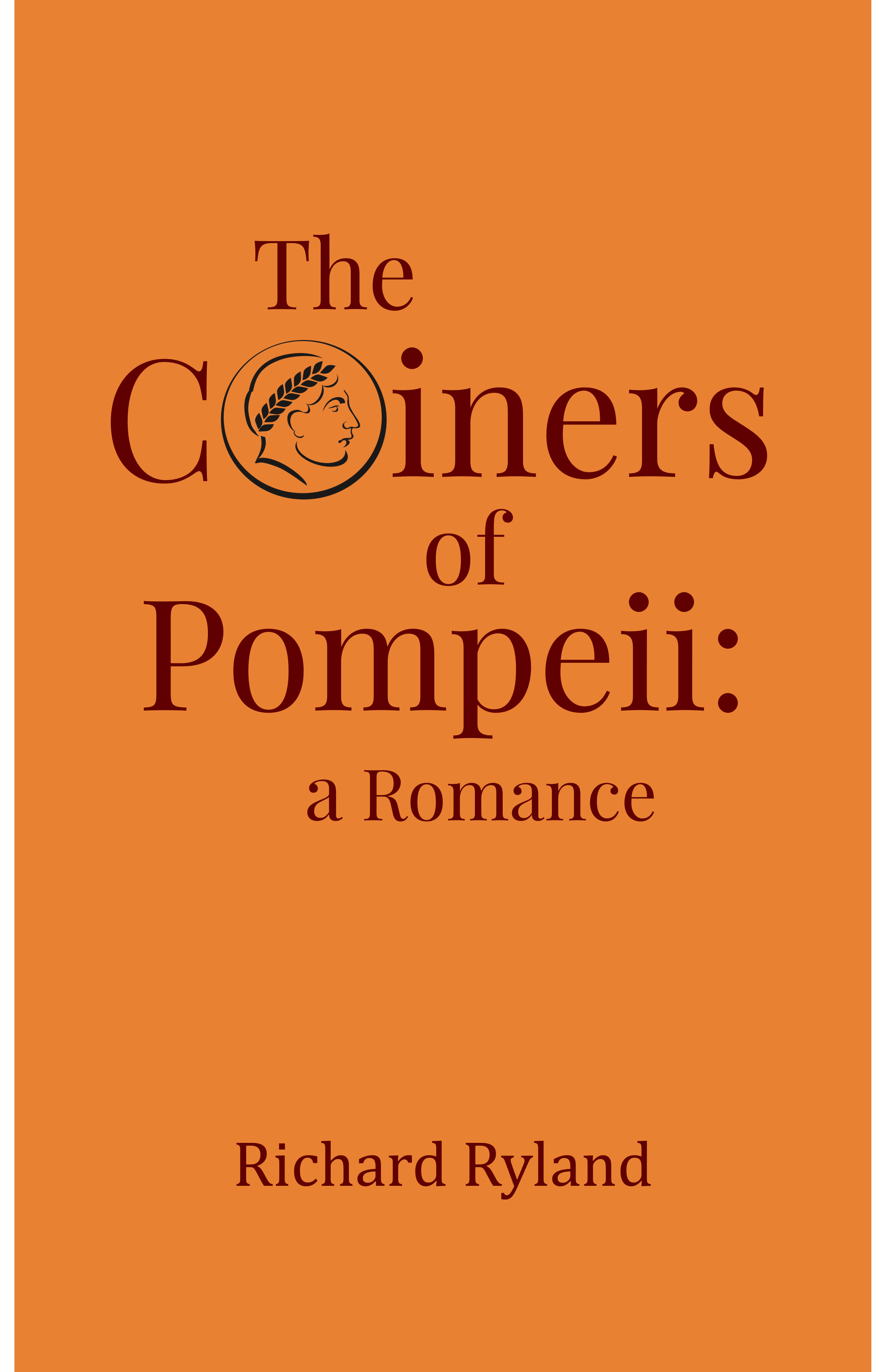
The Coiners of Pompeii: a Romance was written by Richard Ryland and published by H. and W. Rowsell in Toronto, Canada in 1845. The novel is largely unknown today, but it was one of the first English-language novels published in the Canada region (predating the Canadian Confederation by twenty-two years).
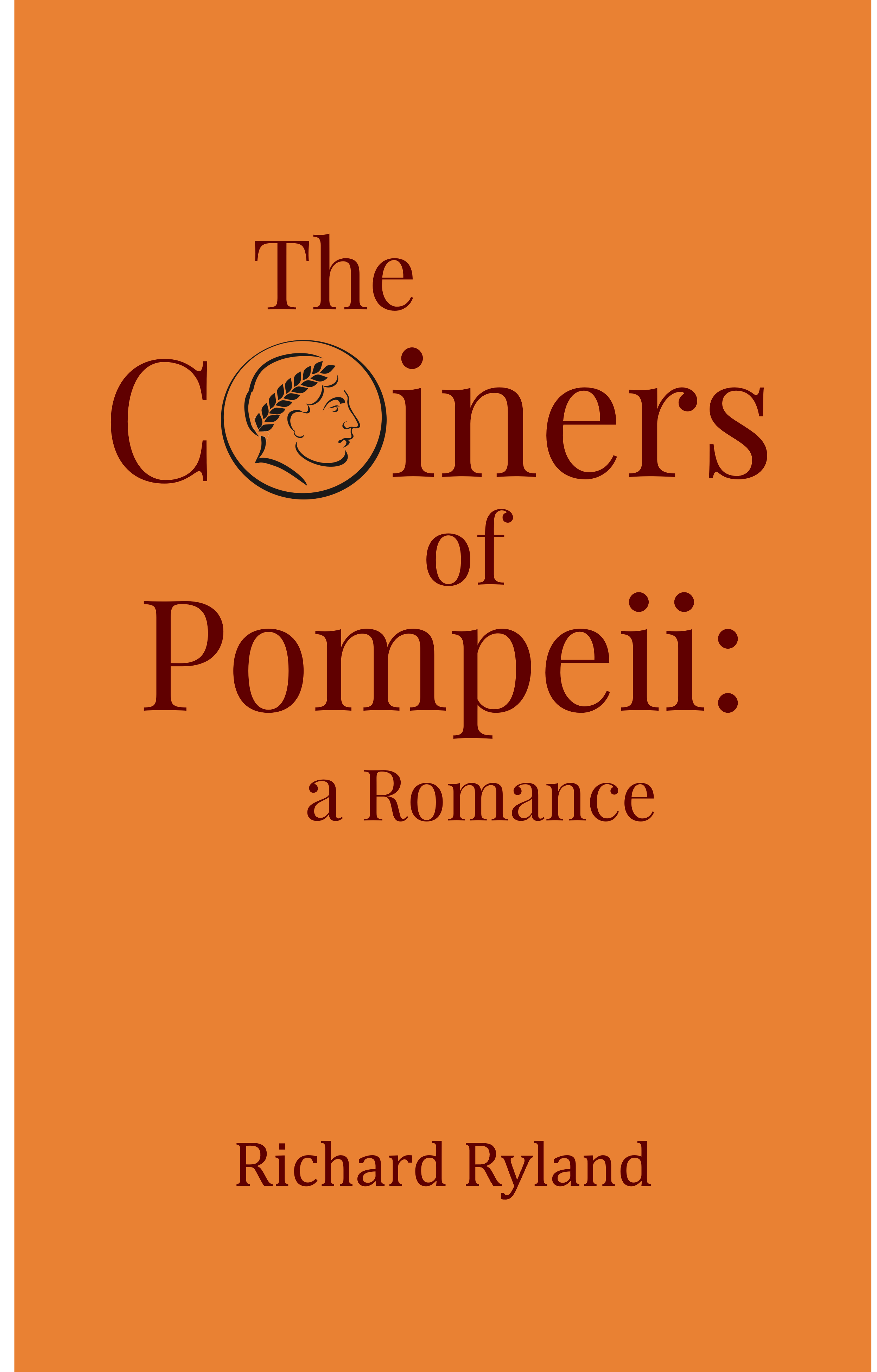
Alois Farnese is passing through the bustling city of Pompeii when he rescues the Prince of Naples and his daughter Emily from their villainous valet de chambre, Peter Guesclin. Alois and Emily fall instantly in love, and in return for her hand Alois agrees to join her father’s gang of coin forgers. Guesclin continues to seek revenge on Emily, but there is someone else in the gang who plots to ruin their coining operation for good, and soon the two will join forces against Alois and his new friends.
Essay by Grace Haddon
The Coiners of Pompeii stands at an interesting place in literary history. Originally published by H. and W. Rowsell in Toronto, 1845, it predates the Canadian Confederation by twenty-two years, and is one of the earliest locally-written English language novels. (Of the nine novels to fit this description, Coiners is the only one which does not include Canada as a setting.[1]) Pompeii had been rediscovered almost a century earlier, and excavations were still underway, but only in the 1830s did “Pompeiimania” truly take off in the literary sphere. Edward Bulwer-Lytton’s The Last Days of Pompeii had released eleven years previously, and since popular literature was often imported from London it is likely the book was familiar to Canadian readers. The Coiners of Pompeii presents a very different Pompeii to similar works of the time: here, it is a modern city, populated with bandits, police and coin forgers. It is also the only book its author wrote.
Richard Ryland left few definitive clues to his identity within Coiners, except for his name and his probable residence in Canada at the time of publication. Based on this evidence, it is likely that he was the son of Reverend Richard Hopkins Ryland (1788-1866), who himself was an amateur historian and author of The History, Topography and Antiquities of the County and City of Waterford, which was published in 1824. His son Richard Ryland was born in 1819 in Waterford, Ireland, the first of eleven children. He moved to Canada some time before 1845, and census records list his profession as farmer and his religion as Church of England. He had no children, and is buried with his brother William Newcome Ryland, who had also moved to Canada. Richard would have been around 26 when The Coiners of Pompeii was published.

H. and W. Rowsell, the book’s publisher, was founded by Henry Rowsell, who was born in London in 1807 and opened a bookstore in 1833 soon after he moved to Canada. (The W stands for his brother William, who initially partnered with him.) The publisher mainly printed books for the University of Toronto and the Church of England, and The Coiners of Pompeii was one of its first literary publications.[2] Publishing was expensive and readers were not guaranteed, so authors often had to provide funds to see their work in print. The “published for the author” subtitle on the book’s cover page suggests this was the case. It was probably a limited run of copies, and no further reprints appear to have been produced.
When Pompeii was rediscovered in around 1748, King Charles III of Spain was on the throne, and he encouraged excavations of the site. In 1762, the Treaty of Fontainebleu was signed, and Charles’ cousin King Louis XV gave the Spanish control of French Louisiana including “the entire area of the drainage basin of the Mississippi River from the Great Lakes to the Gulf of Mexico and from the Appalachian Mountains to the Rocky Mountains.” The British had already taken Canada in the ongoing Seven Years War, but it is interesting that the man who ruled when Pompeii re-emerged also owned a piece of land not a million miles away from Canada. Likely in reference to King Charles, the protagonist of the novel shares his surname: Farnese.
Amongst other literary works set in Pompeii, Coiners is unusual in that it does not take place in 79 AD, the year of Mount Vesuvius’ devastating eruption. Instead, protagonist Alois Farnese finds himself in an inexplicably bustling, modern-day city. Vesuvius is mentioned only in the first chapter, and the main source of antagonism comes in the form of the villainous Peter Guesclin. Whilst other novels of the time liked to emphasise their basis in fact and truth, Ryland prefaces the novel with a statement in support of the romance genre (i.e. fiction depicting events unlikely to happen in real life). He writes: “A Novel or a Romance, we will all at once admit, is written not so much for instruction, or for the giving of a moral lesson to the reader, as for the amusement of his or her mind in their leisure moments.”
The Coiners of Pompeii, then, does not take itself too seriously. Vesuvius sleeps whilst Alois chases thieves through Pompeii’s crowded streets, and the villains grind their teeth as they plot revenge. Amongst the shelves of Pompeii fiction which seek to educate and to understand how its people may have lived, it is refreshing to settle down and enjoy a story for what it is: a story.
[1] Lu MacDonald, M. (1992) ‘The Chesapeake and the Shannon Approach the Canon’, Canadian Poetry, Vol. 30 (Spring/Summer). Available at: https://canadianpoetry.org/volumes/vol30/macdonald.html (Accessed: 02/02/2026)
[2] Parker, George L. (1985) The Beginnings of the Book Trade in Canada. Toronto: University of Toronto Press, pp. 78-79.